Welcome to the Journal of Modern Literature news and information site.


Check here for updates about our latest issues, calls for papers, submission guidelines and tips, as well special online-only content. Our issues themselves are available at Project Muse and are archived on JSTOR . Check out the "Read for Free" page to enjoy some featured content.


More than four decades after its founding, the Journal of Modern Literature remains a leading scholarly journal in the field of modern and contemporary literature and is widely recognized as such. It emphasizes scholarly studies of literature in all languages, as well as related arts and cultural artifacts, from 1900 to the present. International in its scope, its contributors include scholars from Africa, Asia, Europe, North America, Oceana, and South America.

Showing posts with label animal studies. Show all posts

Tuesday, March 31, 2026

A Closer Look at JML 49.2: What Happens When Regionalism Takes Animals Seriously?


In a post for the Indiana University Press blog, author Nir Evron discusses how Mary E. Wilkins Freeman, like other regionalist writers, depicts animals as individualized beings with distinctive experiences and inner lives that demand recognition and interpretation. Read it HERE.

His JML 49.2 essay, "Intimate Strangers: Regionalism and the Construction of Nonhuman Subjectivities in Mary E. Wilkins Freeman’s Animal Fiction," is available to read FREE for a limited time.


Monday, March 30, 2026

NEW ISSUE: JML 49.2, “Bodies, Subjectivities, and States of Queer Abundance”


JML 49.2 (Winter 2026), edited by Ramón E. Soto-Crespo, on the theme “Bodies, Subjectivities, and States of Queer Abundance” is now live on Project MUSE at https://muse.jhu.edu/issue/56630.

Content includes:

Nir Evron

Intimate Strangers: Regionalism and the Construction of Nonhuman Subjectivities in Mary E. Wilkins Freeman’s Animal Fiction

FREE


Claire Marie Class

X-Rays, Probes, Fingers, and Noses: Empiricism in Rudolph Fisher’s Detective Fiction 


Ian Tan

Narrative Equilibrium and Biopolitical Aesthetic Image in Philip Roth’s Nemesis: Health as Hermeneutical Exchange 


Meindert Peters

No Creature of Habit? Gregor’s Dancing Dis/Abilities in Arthur Pita’s Adaptation of Franz Kafka’s The Metamorphosis 


Megan Girdwood

“As if some lovely rose had blossomed for her eyes only”: Virginia Woolf, the Ballets Russes, and Le Spectre de la Rose (1911) 


Jena DiMaggio

Abortion Epistemology: Ambivalence in the Abortion Plot in Modern Literature 


Julyan Oldham

“Preserved Through Childbirth”: Reading Deep in Mrs. Dalloway’s Virginity 


Chris Coffman

H.D.’s Nonbinary Poetics


Daniel Swain

Frank O'Hara Has Collapsed! 


Julia C. Obert

Queering Irish Joy: Seán Hewitt’s Rapture’s Road 


Reviews 

Grant Matthew Jenkins

“This Is Your Brain on Poetry” 


Aaron Stone

How to Do the History of Queer American Literature


Monday, May 20, 2024

BOOK NEWS: Modernist studies meet critical animal studies

Beastly Modernisms: The Figure of the Animal in Modernist Literature and Culture

EDITED BY ALEX GOODY AND SASKIA MCCRACKEN


Edinburgh UP, 2023 

ISBN: 9781474498029

https://edinburghuniversitypress.com/book-beastly-modernisms.html


A contemporary collection of scholarly essays exploring the vibrant intersections of modernist studies and critical animal studies

  • Presents the diverse range of intersections between modernist and critical animal studies
  • Includes cutting-edge research contributions from a heterogenous and interdisciplinary range of modernist scholars
  • Offers a key research resource for scholars in modernist studies, critical animal studies and cognate areas
  • Provides a classroom-ready collection of essays relevant to undergraduate and graduate courses on modernist writing and critical animal studies

The intersection of modernist studies and critical animal studies is a new and progressive field of enquiry that locates crucial questions about what it means to live with animals at the foundation of modernity. Beastly Modernisms gathers essays from leading figures in the field alongside new and emerging scholars who, together, revisit canonical figures and decentre the canons and geographies of modernism. Grounded in interdisciplinary approaches, the contributions work with cultural history and theoretical frameworks to unearth the multispecies dynamics of twentieth-century literature and culture. 

BOOK NEWS is an online-only feature announcing new publications in modernist and contemporary literary studies. These announcements do NOT constitute an endorsement by the Journal of Modern Literature.

The chapters in Beastly Modernisms present a diverse range of approaches and topics, exploring dogs in Virginia Woolf to Republican China, animals and gender in surrealism to African-American texts, Sámi reindeer to rat propaganda, modernist jellyfish to metamodernist beasts, 1940s poetry to Indian Partition stories, and chart the current and future state of modernist animal studies.


"Overall, these scholars offer a fascinating analysis of the ways in which writers use nonhuman animals to explore and contest the traditional limits of modernism. All of the volume’s essays are informed by sophisticated theoretical positions, but most are clearly written enough for determined undergraduates—although graduate students may find the volume more useful." – R.D. Morrison, Morehead State University

"A major contribution to animal studies as well as modernist studies, Beastly Modernisms gathers international perspectives that strategically redeploy modern profusions of beastliness—whether within, without, or betwixt and between (sometimes human) animals—in ways geared to advance timely feminist, antiracist, and decolonial critiques." – Susan McHugh, University of New England


Alex Goody is professor of twentieth-century literature & culture at Oxford Brookes University, UK. She is the author of Gender, Leisure Technology and Modernist Poetry: Machine Amusements (2019),Technology, Literature and Culture (2011) and Modernist Articulations: a cultural study of Djuna Barnes, Mina Loy and Gertrude Stein (2007), and co-editor of The Edinburgh Companion to Modernism and Technology (2022), Reading Westworld (2019) and American Modernism: Cultural Transactions (2009).

Saskia McCracken completed her PhD on Virginia Woolf’s Darwinian animal tropes at the University of Glasgow. Her research has been published in The Modern Short Story and Magazine Culture: 1880-1950 (2021), Modernism/Modernity: Reading Modernism in the Sixth Extinction (2022), Animal Satire (2022), and Crossing Borders: Transnational Modernism Beyond the Human, and Virginia Woolf and the Anthropocene (2024). She also transcribed the first manuscript draft of Flush: A Biography for the Cambridge edition.

Wednesday, January 3, 2024

BOOK NEWS: Using Animal Studies tools to approach liminal figures in fiction

Doing Animal Studies with Androids, Aliens, and Ghosts: Defamiliarizing Human-Nonhuman Animal Relationships in Fiction

BY DAVID P. RONDO


Bloomsbury, 2023

ISBN: 9781350356122

https://www.bloomsbury.com/us/doing-animal-studies-with-androids-aliens-and-ghosts-9781350356122/


Exploring what can be learned when literary critics in the field of animal studies temporarily direct attention away from representations of nonhuman animals in literature and towards liminal figures like androids, aliens and ghosts, this book examines the boundaries of humanness. Simultaneously, it encourages the reader both to see nonhuman animals afresh and to reimagine the terms of our relationships with them.

BOOK NEWS is an online-only feature announcing new publications in modernist and contemporary literary studies. These announcements do NOT constitute an endorsement by the Journal of Modern Literature.

Examining imaginative texts by writers such as Octavia Butler, Philip K. Dick, Kazuo Ishiguro, Jeanette Winterson and J. M. Coetzee, this book looks at depictions of androids that redefine traditional humanist qualities such as hope and uniqueness. It examines alien visions that unmask the racist and heteronormative roots of speciesism. And it unpacks examples of ghosts and spirits who offer posthumous visions of having-been-human that decenter anthropocentrism. In doing so, it leaves open the potential for better relationships and futures with nonhuman animals.


"A great leap forward in the literary-theoretical approach to animal studies. Recommended for students of theory and fantastika. Heartily recomment" —Anthony Lioi, The Julliard School

"Doing Animal Studies with Androids, Aliens, and Ghosts provides a brilliantly subtle and compelling discussion of how thinking about entities that aren't animals can change our conceptions of animals by reconfiguring understanding of the human." —John Miller, University of Sheffield


David P. Rando is a professor in the Department of English at Trinity University in San Antonio, TX. He is the author of Hope, Form, and Future in the Work of James Joyce (Bloomsbury, 2022); Hope and Wish Image in Music Technology (Palgrave, 2017); and Modernist Fiction and News (Palgrave, 2011). 


Thursday, October 12, 2023

JML 46.4 (Summer 2023) is now LIVE!


JML 46.4 (Summer 2023), "Evocations of Intimacy," is now LIVE on Project Muse at https://muse.jhu.edu/issue/51258


Content includes:


Anca Parvulescu

The Biography of a Face: Virginia Woolf’s Orlando


Patty Argyrides

Hauntingly Beautiful: Embodied Reading, Virginia Woolf, and Woolf Works 


Patricia Morgne Cramer

“Everyone chooses their love after their own fashion”: The Waves as a Modernist Symposium 

FREE!


Cory Austin Knudson

Animality and the Limits of Discourse in Djuna Barnes and Georges Bataille

FREE!


Farah Ali

The Invisible Flesh: Mimesis in Jean Genet’s The Maids


Molly B. Lewis

The Life-Giving Efficacy of Beauty and Desire in Stoppard’s Drama 


Sina Movaghati

A Beast to Be Slain: The Tiger and the Unquenched Desire of Man


Yi-chin Shih

Senses of Place: The Black Community in Alice Childress’s Wedding Band


Hsiao-wen Chen

Black Cosmofeminism: Commodity, Sexuality, and the Transnational Mixed-Race Subject in Nella Larsen’s Quicksand


Celiese Lypka

“I Look Straight into His Eyes … For the Last Time”: Intimacy and Indifference in Jean Rhys’s Good Morning, Midnight 


Reviews

Karalyn Kendall-Morwick

Imagining Justice for Sentient Lives 


Caroline Hovanec 

The Modernist Dog 


Tuesday, July 11, 2023

Book News: Animals in the writings of the Bloomsbury group

 Bloomsbury, Beasts and British Modernist Literature

BY DEREK RYAN


Cambridge UP, 2022

ISBN: 9781009182973

https://www.cambridge.org/gb/universitypress/subjects/literature/english-literature-1900-1945/bloomsbury-beasts-and-british-modernist-literature


Bloomsbury, Beasts and British Modernist Literature reveals how the Bloomsbury group's fascination with beasts – from pests to pets, tiny insects to big game – became an integral part of their critique of modernity and conceptualization of more-than-human worlds. Through a series of close readings, it argues that for Leonard Woolf, David Garnett, Virginia Woolf and E. M. Forster, profound shifts in interspecies relations were intimately connected to questions of imperialism, race, gender, sexuality and technology. Whether in their hunting narratives, zoo fictions, canine biographies or (un)entomological aesthetics, these writers repeatedly test the boundaries between, and imagine transformations of the human and nonhuman by insisting that we attend to the material contexts in which they meet. In demonstrating this, the book enriches our understanding of British modernism while intervening in debates on the cultural significance of animality from the turn of the twentieth century to the Second World War.

BOOK NEWS is an online-only feature announcing new publications in modernist and contemporary literary studies. These announcements do NOT constitute an endorsement by the Journal of Modern Literature.

  • Offers sustained attention on the significance of animals in literary modernism's engagement with zoos, hunting, pets and insects, showing readers how literary animal studies and modernist studies can form a mutually enriching dialogue
  • Reassesses the Bloomsbury group's approach to questions of colonialism, race, gender, sexuality and technology through their engagement with human-animal relations
  • Provides original close readings informed by archival documents, newspapers, draft manuscripts, literary intertexts, zoological studies, natural history and animal theory


Derek Ryan is senior lecturer in modernist literature at the University of Kent. His previous publications include Animal Theory: A Critical Introduction (2015) and the co-edited volumes The Handbook to the Bloomsbury Group (2018) and Reading Literary Animals: Medieval to Modern (2019).

Wednesday, July 27, 2022

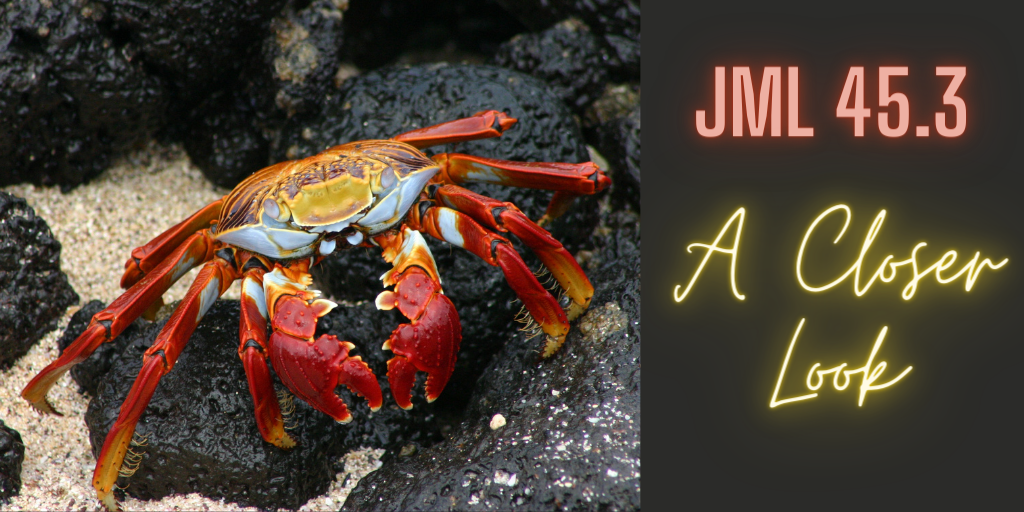
Eliot's "things that cling": A Closer Look at JML 45.3


Take a closer look at JML 45.3. Author Rachel Murray shares how Eliot's gripping crustaceans help us understand attachment in his writing in THIS POST for the Indiana University Press blog

Her essay, “Things That Cling: Marine Attachment in Eliot” is now available for FREE on Project Muse.

Wednesday, January 19, 2022

JML 45.1 (Fall 2021) is LIVE!


JML 45.1 (Fall 2021) is now available. Find it on Project Muse at https://muse.jhu.edu/issue/47191.


Bodies

Calista McRae

“More human than others”: Stevie Smith and the Minds of Pets 

FREE


Caroline Hovanec

“Animal/Fool/Clown”: Stevie Smith’s Frivolity


Aleksandra Hernandez

Jack London’s Poetic Animality and the Problem of Domestication


Tali Banin

The Winged Creatures of The Waves and Virginia Woolf’s Figurations of “The One” 

FREE


Karen Ya-Chu Yang

Female Biologists and the Practice of Dialogical Connectivity in Barbara Kingsolver’s Prodigal Summer


Michael Davidson

“how to dance / sitting down”: Aging, Innovation, and the Graying of Disability 


Benjamin Kossak

A Choreography of Parts: The Impersonal Intimacies of Touch and Movement in Mei-Mei Berssenbrugge’s Poetry, Contact Improvisation, and Embodied Reading


Katie Collins

“Her Ruined Head”: Defacement and Bodyminds in Jean Stafford’s Life and Work 


Naomi Miyazawa

The Blindness of the Writer in Nabokov’s Despair


Takashi Sakai

Stonewall Offstage: Recontextualizing Tennessee Williams’s Small Craft Warnings


Reviews

Robert Volpicelli

Modernist Illness Now


Jess Waggoner

Leaky Masculinities, Porous Nations, Queercrip Affiliations


Rainer Rumold

After the Animal Fable: Creaturely Ciphers in transition


Monday, March 23, 2020

Logics of the Living: JML 43.2 is now live!


JML 43.2 (Winter 2020), on the theme Logics of the Living, is now live on JSTOR at https://www.jstor.org/stable/10.2979/jmodelite.43.issue-2 and on Project Muse at https://muse.jhu.edu/issue/42104

Content includes:

Rached Khalifa
“The Echo-Harbouring Shell”: Of Shells and Selves in Paul Valéry and W.B. Yeats

Paola Villa
Mollusk-Writers: Spacetime Revolutions in a Literary Shell

Lauren Benjamin
Circe’s Feral Beasts: Women and Other Animals in Joyce’s Ulysses 

Peter Balbert
From Relativity to Paraphrenia in D. H. Lawrence’s “The Man Who Loved Islands”:
Speculations on Einstein, Freud, Gossamer Webs, and Seagulls

Graham Fraser
Solid Objects/Ghosts of Chairs: Virginia Woolf and the Afterlife of Things

Rachel Pomery
Ritual, Place, and Pilgrimage: A Topological Approach to David Jones’s The Anathémata

Nathaniel Otjen
Energy Anxiety and Fossil Fuel Modernity in H.G. Wells’s The War of the Worlds

Melanie Nicholson
Necessary and Unnecessary Monsters: Jorge Luis Borges’s Book of Imaginary Beings 

Elin Käck
“Horrible Washing Sawing”: Ecology and Anthropocentric Sublimity in Jack Kerouac’s Big Sur

Magdalena Mączyńska
Welcome to the Post-Anthropolis: Urban Space and Climate Change in Nathaniel Rich’s Odds Against Tomorrow, Lev Rosen’s Depth, and Kim Stanley Robinson’s New York 2140

Miguel Caballero
A Matter of Scale: Race and the Skyscraper

Rebecah Pulsifer
Adding Mathematics to Modernist Studies

Henry N. Gifford
Mathematical Transfinites and Modernism: Literary Infinities: Number and Narrative in Modern Fiction