Welcome to the Journal of Modern Literature news and information site.


Check here for updates about our latest issues, calls for papers, submission guidelines and tips, as well special online-only content. Our issues themselves are available at Project Muse and are archived on JSTOR . Check out the "Read for Free" page to enjoy some featured content.


More than four decades after its founding, the Journal of Modern Literature remains a leading scholarly journal in the field of modern and contemporary literature and is widely recognized as such. It emphasizes scholarly studies of literature in all languages, as well as related arts and cultural artifacts, from 1900 to the present. International in its scope, its contributors include scholars from Africa, Asia, Europe, North America, Oceana, and South America.

Showing posts with label Editor Spotlight. Show all posts

Friday, November 8, 2024

Welcome new JML co-editor Jessica Burstein


Jessica Burstein has been promoted from advisory editor to co-editor of the Journal of Modern Literature. Burstein has had a long career in editing, learning while serving as a lackey (the term “editorial assistant” had yet to be invented, and those chosen did not appear on the masthead) at Critical Inquiry; then serving as the first founding managing editor of Modernism/modernity, beginning in a room with a chair, a phone, and a rolodex, and putting together its early issues. 

As an associate professor in the Department of English and adjunct in the Department of Gender, Women and Sexuality Studies at the University of Washington in Seattle, Burstein currently serves on the editorial boards of Modern Language Quarterly, as well as the advisory editorial board of Modernism/modernity. Their own critical work focuses on fashion and modernism; but they nurse a residual fondness for the history of sciences, and contemporary fiction. Burstein’s novel What It Was Like Not To Sleep With You has yet to find a press; meanwhile you can find Cold Modernism: Literature, Fashion, Art in an art history library near you.


Thursday, January 11, 2024

Welcome new JML co-editor Michael Leong

Michael Leong has been promoted from advisory editor to co-editor of the Journal of Modern Literature. Dr. Leong is Robert P. Hubbard Assistant Professor of Poetry at Kenyon College. He is the author of several books of poetry—most recently Words on Edge (2018)—and the monograph Contested Records: The Turn to Documents in Contemporary North American Poetry (U of Iowa P, 2020). His essays on poetry and poetics have appeared or are forthcoming in a wide range of journals including A Contracorriente: A Journal on Social History and Literature in Latin America; ARCADE: Literature, the Humanities, & the World; Contemporary Literature; Denver Quarterly; The Hopkins Review; Hyperrhiz: New Media Cultures; Interim; Jacket2; Journal of Modern Literature; Modern Language Studies; Paideuma: Modern and Contemporary Poetry and Poetics; and Verge: Studies in Global Asias. He has previously served on the editorial board of American Literature. He lives in Central Ohio.

Dr. Leong joins the team of co-editors that includes Robert Caserio, Penn State University; Caren Irr, Brandeis University; Janet Lyon, Penn State University; Daniel T. O'Hara, Temple University; Jean-Michel Rabaté, University of Pennsylvania; Ramón E. Soto-Crespo, University of Illinois at Urbana-Champaign; Robert T. Tally, Jr., Texas State University; and Jennifer Yusin, Drexel University. 

Friday, December 8, 2023

Remembering Alan Wilde, JML editorial board 1970-2003


© Temple University Libraries, Special
Collections Research Center, 1986

We are saddened to report that Alan Wilde, a founding member of the Journal of Modern Literature's editorial board, passed away November 25, 2023, at age 94. He served on the editorial board from the journal's founding in 1970 until 2003.

Wilde earned his BA and PhD from Harvard University, spent a year in Britain on a Fulbright Scholarship, and won a Guggenheim Fellowship in 1986. He was a professor at Temple University until retiring in 1994. 


His books include: Art and Order: A Study of E.M. Forster (New York UP, 1964); Christopher Isherwood (Twayne Publishers, 1971), Horizons of Assent: Modernism, Postmodernism, and the Ironic Imagination (Johns Hopkins UP, 1981; pb reprint with new preface, U of Pennsylvania P, 1987); Middle Grounds:  Studies in American Fiction (U of Pennsylvania P,1987). Wilde also published as editor a collection of critical essays Critical Essays on E.M. Forster (Twayne Publishers, 1990).

Wednesday, September 21, 2022

A tribute to Morton P. Levitt, JML's editor-in-chief 1986-2005


© 1994, Temple University. Office of University Relations.

Morton P. Levitt (1936-2022), second editor of JML (1986-2005), died at home on September 10 of this year. Having worked closely with the founding editor Maurice Beebe from the journal’s inception in 1970, Mort (as he preferred to be called) self-identified as a “new critic,” though his form of it was the later New Criticism blended seamlessly with literary historical scholarship, especially focused on James Joyce and other international modernist writers, including Nikos Kazantzakis, about whom Mort wrote an important book: The Cretan Glance: The World and Art of Nikos Kazantzakis. Mort’s other books included Bloomsday: An Introduction to James Joyce's Ulysses; The Modernist Masters; Modernist Survivors; and The Rhetoric of Modernist Fiction. With his wife Annette, a celebrated professor and scholar in her own right, he would welcome local, national, and international critics and writers (even critical theorists) into their home for parties where long-term friendships, not just connections, were made and sealed, an important project of civilization we now take for granted. 

As academic budgets began to be cut in the mid-nineties, Mort was able to search for a more stable publisher of JML and found one in Indiana University Press, which continues to provide loyal support for it. He also set up the transition to Ellen Rose as editor-in-chief as part of a new collective of editors that now jointly edits JML successfully on an expanded and more diversified basis. The journal owes the shape and substance of its present existence and of any future to come primarily to Mort, for whose foresight, wisdom, and friendship we are so grateful to have known and loved.

Monday, April 25, 2022

Welcome new JML co-editors!

Longtime JML co-editor Paula Marantz Cohen stepped down from her position this winter due to her heavy responsibilities as dean of the Pennoni Honors College at Drexel University. We have published a farewell tribute in JML 45.3.

Three former JML advisory editors have been promoted to co-editor:


Caren Irr
is professor of English at Brandeis University. She is the author of three monographs--most recently Toward the Geopolitical Novel: American Fiction in the 21st Century (Columbia 2013). She has also edited five collections. Her latest books,  Life in Plastic: Artistic Responses to Petromodernity and Adorno's Minima Moralia in the 21st Century: Fascism, Work and Ecology, both appeared in late 2021.  

Ramón E. Soto-Crespo is professor of English at the University of Illinois at Urbana-Champaign.  He served as director of the Latino Studies Program at the University at Buffalo (SUNY) from 2002 to 2012. He is the author of Mainland Passage: The Cultural Anomaly of Puerto Rico (2009), which won honorable mention at the 2009 Modern Language Association Prize in United States Latino and Chicano Literary and Cultural Studies, and most recently of The White Trash Menace and Hemispheric Fiction (2020). His essays have appeared in American Literary History, Atlantic Studies, Modern Language Notes, Modern Fiction Studies, Contemporary Literature, and Textual Practice. He has been the recipient of fellowships and grants from the Ford Foundation, the University of Wisconsin Institute on Race and Ethnicity, the Schomburg Foundation, Dr. Nuala McGann Drescher Research Fellowship, the Baldy Center for Law and Social Policy, the UB Humanities Institute, and the UIUC Humanities Research Institute.  His most recent book manuscript, tentatively titled Neobugarron: Latina/o American Sexual Practice in the Age of Neoliberalism, is forthcoming.


Robert T. Tally Jr. is professor of English at Texas State University. His recent books include For a Ruthless Critique of All That Exists (2022); Topophrenia: Place, Narrative, and the Spatial Imagination (2019); Fredric Jameson: The Project of Dialectic Criticism (2014); Poe and the Subversion of American Literature (2014); Spatiality (2013); Utopia in the Age of Globalization (2013); and, as editor, Spatial Literary Studies (2020), Teaching Space, Place, and Literature (2018); and The Routledge Handbook of Literature and Space (2017). Tally is also the general editor of “Geocriticism and Spatial Literary Studies,” a Palgrave Macmillan book series.


These new editors join Robert Caserio, Penn State University; Janet Lyon, Penn State University; Daniel T. O'Hara, Temple University; Jean-Michel Rabaté, University of Pennsylvania; and Jennifer Yusin, Drexel University. 

Friday, June 11, 2021

Remembering Sheldon Brivic, 1943-2020

 By Daniel T. O’Hara, JML Co-Editor 

We are saddened to report that Sheldon (Shelly) Brivic, a JML advisory editor since the 1970s, retired Temple University English professor, and a Joyce and modern fiction specialist of considerable renown, died on November 29, 2020, at the age of 77. 


Another retired former colleague, close friend and JML advisory editor, Alan Singer, had heard the news and alerted me. Prior to his death,  Brivic had voluntarily been living with his wife Barbara, who had been ill with Alzheimer’s, in Sunrise of Lafayette, an assisted living facility specializing in memory care.

When I googled his name to learn more details, I was still in a bit of a shock. Thanks to Google, one of the items popping up was a 2019 letter to the New York Times, which I will quote in full as it is characteristic of Brivic: succinct, corrective, and objective.

March 22, 2019

‘Good Bait’

To the Editor:

James McBride’s fine review of the magnificent Toni Morrison’s “The Source of Self-Regard: Selected Essays, Speeches, and Meditations” (March 3) refers to “the swing-era song ‘Good Bait,’ made famous by Count Basie.” Basie recorded “Good Bait,” but it was composed by the pianist Tadd Dameron, who has not received enough credit for being one of jazz’s greatest Composers.

Sheldon Brivic 

Lafayette Hills, PA   


This is not to say Shelly, as he was affectionately known by all, was lacking affect. He was subtle at self-expression, as in the last sentence here, with this reader thinking “shouldn’t any reviewer of this book know whereof he speaks concerning ‘Good Bait’ and its composer when it is a matter of pride in achievement by Morrison, African-American Nobel Laureate and should be so for James McBride, the nearly as well-known African-American writer, memoirist, and reviewer?” Shelly just states the facts, however, and leaves the ramifying implications, emotional and intellectual, to sort through, to us and McBride.

This was the same style Shelly expressed in his books, most (5 of the 7 scholarly monographs) on Joyce from a psychoanalytic perspective, including Joyce Between Freud and Jung (1980), Joyce the Creator (1985), The Veil of Signs: Joyce, Lacan and Perception (1991), Joyce’s Waking Women: A Feminist Introduction to Finnegan Wake (1995), Joyce through Lacan and Zizek (2008). The two other critical theoretical books he authored  are Tears of Rage: The Racial Interface of Modern American Fiction: Faulkner, Wright, Pynchon, Morrison (2008) and  Revolutionary Damnation: Badiou and Irish Fiction from Joyce to Enright (2017). Stealing: a Novel in Dreams was published in 2019 (JML’s review is available HERE). This JML blog got its start housing this review of Shelly’s novel. 


As a long-time JML advisory editor, Shelly did yeoman duty with evaluating submissions and reviewing new books in his field, as well as publishing articles himself. For example, in "Revolutionary Joyce" he reviewed a new book, The Strong Spirit: History, Politics, and Aesthetics in the Writings of James Joyce, 1898–1915, by Andrew Gibson (JML 38.2, Winter 2015, pp. 183-190); and in "Residual and Emergent Cultures in Joyce Studies" he reviewed several important new books, expanding Joyce Studies: Semicolonial Joyce by Derek Attridge, Marjorie Howes; Ulysses: En-Gendered Perspectives: Eighteen New Essays on the Episodes by Kimberly J. Devlin, Marilyn Reizbaum; Chaos Theory and James Joyce's Everyman by Peter Francis Mackey; Joyce's Book of Memory: The Mnemotechnic of Ulysses by John S. Rickard; Joyce and Hagiography: Saints above! by R. J. Schork (JML 23.3/4, Summer 2000, pp. 575-581). His latest article in the journal was "The Lacanian Phallus and the Lesbian One in Wharton's 'Xingu'” (JML 35.2, Winter 2012, pp. 25-36).

Fifteen years ago, Shelly appeared with me and a then recently graduated PhD student of mine Gina MacKenzie (now associate professor and associate dean at Holy Family University and a current JML advisory editor) on an MLA Panel about Lacanian approaches to modernism. Gina and I discussed, from a Lacanian revised perspective on the drive, how some of Wallace Stevens’s so-called “poems of death” enacted shy solicitations of Death by a nearly fulfilled old Eros—only lacking this last Beloved to seal the deal with the Real, as it were. For his part, Shelly was discussing how Lacan and Zizek made him see Morrison’s fiction anew, as so many “tears of rage” as in the song of the title by the Band (co-written by its lead guitarist Robbie Robertson and Bob Dylan). What united us few in life then, and so many more now in this pandemic land’s death-in-life, is clearly a community of feeling enjoying rare pleasures in intellectual loves. Tears of rage may be tears of  grief, as the song puts it, but they are so only because they are first of all tears of love.  Shelly Brivic is a greatly missed colleague and friend.  

Thursday, August 1, 2019

Sad goodbye to JML advisory editor Joshua B. Lukin

It is with great sorrow that the editors of JML acknowledge the sudden passing of advisory editor Joshua B. Lukin, who was known to all as a good man and a brilliant interlocutor.  We offer our sincerest condolences to his family and friends, and especially his wife Ann Keefer.  He will be missed terribly.

Philadelphia Inquirer obituary

Joshua B. Lukin Biography 

Josh Lukin taught full-time in Temple University’s First-Year Writing Program, where he has earned five Outstanding Teacher citations and been inducted into the Instructors’ Hall of Fame; he has also taught literature courses in the history of criticism, contemporary global fiction, noir film and fiction, and social issues in literature. His scholarly interests included U.S. Fiction since 1945 and Disability Studies. Josh has published articles, reviews, and interviews in such venues as Journal of Modern Literature, MLN, minnesota review, Twentieth-Century Literature, and the Encyclopedia of American Disability History. He was the editor of Invisible Suburbs: Recovering Protest Fiction in the 1950s United States (University Press of Mississippi, 2008), an anthology in which he and six other scholars look at how, in an era where older modes of resistance were discredited, stigmatized, or destroyed, literature illuminated the efforts of marginalized groups to salvage or to reconceptualize their struggles for rights and recognition.

Dr. Lukin served on the Modern Language Association’s Committee on Disability Issues in the Profession and on Temple’s Interdisciplinary Faculty Council on Disability. His work has been taught at many schools, among them the University of Michigan, the University of Washington, Purdue North Central, the University of Minnesota, University of Sussex, CUNY Graduate Center, Central Michigan University, National Chiao Tung University, the University of Chicago, San Diego State University, Southern Illinois University, and Haverford College. His last projects include a collection of his interviews with feminist authors and Noir Recognitions, a study of identity in the 1950s novels of Jim Thompson, Patricia Highsmith, Shirley Jackson, and Philip Dick. He lived in Philadelphia and enjoyed dining out, folksinging, classical theater, chamber music, and feline companionship.


Friday, April 19, 2019

Shame’s Voices in Shelly Brivic’s Stealing: A Novel in Dreams

By Janina Levin

The stereotype that literary critics write bad novels does not apply to Joyce critic and JML advisory editor Shelly Brivic, who just published his first work of literary fiction, Stealing: A Novel in Dreams, after a fifty-plus year career in academia. Both the critical and the creative force of these years enabled him to develop the subject of human freedom through the medium of art while transcending literary criticism’s trends and fads. A sampling of his titles from 1985 to 2017 shows how his thinking would link art with revolution more and more strongly, moving from Joyce the Creator (1985) to Tears of Rage (2008) and Revolutionary Damnation (2017). Although Brivic is well known for having engaged the work of psychoanalyst Jacques Lacan for a good part of his career, and although he has written two book-length treatments linking Lacanian themes to the works of James Joyce (Veil of Signs in 1991 and Joyce through Lacan and Zizek in 2008), these are not arcane analyses, and they are still in print. His engagement with Lacan has honed his understanding of the psychological struggles of ordinary people. I first heard him talk about the novel in his graduate seminar on Joyce in 2001, and was struck by his ability to move easily from criticism to the stuff of life that fuels good art and good criticism.

 Stealing can be read as a realistic novel about a dysfunctional family and as a work of experimental fiction in the modernist tradition, elevating the trials of ordinary people into a narrative about freedom and consciousness through art. Its realist narrative offers a familiar portrait of eastern European Jewish immigrants – the parents with their mishegas overfeeding and overvaluing their only asset – their kids. Readers will recognize these ambitious kids burdened with their parents’ high hopes in many post-war Jewish novels.

 The novel opens with an ordinary dinner in the Glogover family home. The mom, Judith, peels carrots onto old newspaper in the kitchen sink while talking to her dead sister in Yiddish about her “mismarriage” (1). She thinks her sons don’t understand her plaints, but they do. Her husband Joel enters the scene after a hard day’s work ready for a fight, accusing her – and the two sons she uses as both a solace and a weapon – of being in “cahoots” to destroy his authority (8). The family row that follows is both typical and highly individualized. It is a scene of mundane domestic misery: the older brother defends the mom and stalks out, the parents pick at each others’ faults, the younger brother tries to negotiate the ruckus. Yet the voice of each family member expresses an individual version of what David Foster Wallace has called “the day to day trenches of existence,” without anyone stealing the show. It’s a family chorus of misery and misunderstanding.
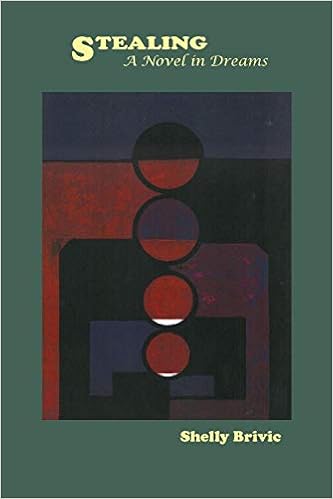
 The narrative follows the different fates of the two sensitive sons, Ira and Marc, who struggle to come to grips with their difficult upbringing. Ira’s is a story of a troubled downward path toward suicide. Marc’s, on the other hand, is more difficult to define in a single narrative strand, since he often holds, in his mind, the double voice of Ira and Marc as an entity itself. But Marc’s story does approach a wisdom narrative by way of a study of Western literature. You don’t have to be Jewish or have grown up in mid-twentieth century America to sympathize with Ira’s rages or Marc’s quest for meaning through psychoanalysis and literature. Stealing explores the way the dead haunt the living in families dealing with suicide, thus contributing to a larger conversation in contemporary fiction about this mental health epidemic. Yet while Stealing offers a thoughtful reflection on the motives of Ira’s suicide and its effects on his family, the novel strives to go beyond considering grief coping strategies, for it also uses experimental techniques. The novel focuses more on what Brivic considers core thematic concerns of modernism, themes that he tackled repeatedly during his career as a literary critic.

 Although both Ira and Marc aspire to become writers, and only one of them reaches this goal, Stealing is not Marc’s story but encompasses both brothers’ voices. Brivic accomplishes this through an experimental technique of presenting about 1/3 of the story in two columns, the left column for Ira and the right one for Marc, a technique that appropriately tracks Ira and Marc’s lived experiences and their intimacy. Although using two columns in a narrative does pose technical difficulties, a second reading gives a sense that as you are obliged to go back and flip the pages to compare Marc’s life with Ira’s, you are returning to the same moment in time that made both brothers suffer such different fates.

Shame—a topic Brivic explores in depth in “Ulysses’ ‘Circe’: Dealing in Shame” (2008)—is also an important theme in his novel, one that structures the entire plot of Stealing. The Glogover family is saturated with typical sources of shame: dirt, cheapness, excretion (the book revels in bathroom humor). The parents reflect the way shame and pride are often distributed along gender lines (“Dealing in Shame” 146). Judith is “shame’s voice,” a voice historically associated with femininity (143). She represents shame as the internal dissatisfactions of the self, linked to how people are kept in their place and stay there, believing they deserve their fate (143). Joel reflects how men hide their shame by reversing it, becoming proud of what would normally be devalued. In the opening chapter, Judith associates her husband with “the wrong end.” Ira remembers him singing in the bathroom, his voice mixing with his farts (Stealing 5). Ira later recalls being forced to witness his father giving himself an enema: “This was the first time I was upset by a rear end. I was told that I should be man enough to accept it” (115).

Brivic has stated that “shame is where the action is” in modern literature, since shame exposes and modernism lays bare structures of power to clear a path and begin anew (“Dealing in Shame” 144). In a critical discussion of Joyce’s Ulysses, Brivic summed up the affective resonance of the book by noting “In most situations in life, people strive to avoid shame and maintain pride…. Joyce as an artist reverses these strivings” (144). This same reversal is at the core of Stealing. But the book’s focus on shame is not a simple reversal, like the father’s bullying, making his sons figuratively eat his shit/shame. Shame in Stealing becomes cathartic because it gives characters the ability to see beyond their current situation. In a climactic scene, after Ira returns home from a mental hospital and refuses any of the food his parents give him, the whole family suddenly breaks down in tears, starting with the father, Joel, who finds himself unable to complain that his eldest son is a waste of resources. Ira’s illness is bigger than all of them, and their collective crying accomplishes a powerful leveling: “They all had an inkling that their problems would’ve been solved if only they could have gone on crying forever” (133). The father’s shame initiates a chain reaction, emptying out all that is inessential. As Brivic suggests, refusing shame as unbearable and masking it with pride leads to paralysis; shame should carve a space for change (“Dealing in Shame” 157).

 One can see the two brothers moving along the gender lines of shame. Ira follows the father in finding shame unbearable; the time period leading up to his suicide portrays the awfulness of being a family burden. Marc, like his mother, learns to compromise and develops a tolerance for all the abuse he encountered at home. As he gets older, he even begins to understand how much his parents enjoy taunting each other. But as Brivic has argued, the opposition between shame and pride along gender lines blurs the route to freedom; historically, we have witnessed a deeper level of understanding in the realms of art and religion, which favor abjection of the self via shame, cultivating a practice of self-emptying that cleanses the self rather than divides it along gender lines (“Dealing in Shame” 145). Stealing favors art as the medium that accomplishes this cleansing.

Works Cited 


Brivic, Shelly. Stealing: A Novel in Dreams. Frayed Edge Press, 2018.

---. “Ulysses’ ‘Circe’: Dealing in Shame.” Joyce Through Lacan and Žižek. Palgrave, 2008, pp. 143-160.

Wallace, David Foster. “This is Water: Commencement Speech (2005).” YouTube, 19 May 2013, https://www.youtube.com/watch?v=8CrOL-ydFMI

 ---

Janina Levin is a lecturer at University of the Sciences, Department of Writing and Rhetoric.